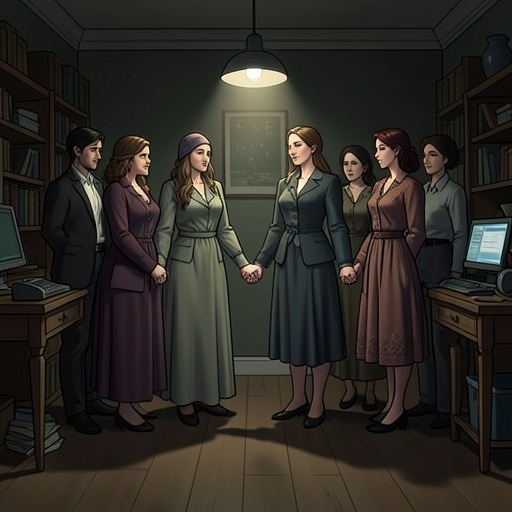
Veronica
The Vampire Prince’s BrideVeronica is a vampire in Matheus Lindgern’s harem and, before Alice arrives, the woman who exercises its most visible informal power. She is not the king’s formal authority, but her favored position in his bed allows her to dominate the other concubines, punish resistance, and shape the daily life of the household. Her importance therefore comes from the way private sexual favor becomes public control: Matheus is too occupied to notice the harem’s internal abuses, while Veronica turns access to him into a weapon against everyone beneath her.
Position in the Harem
Veronica’s authority is described through Lindsey’s experience. Lindsey has been in the harem for about a year, after being taken from her parents’ farm and retained as another concubine when Matheus rejected her. She has slept with the king only a few times; Veronica, by contrast, is his favorite and “sort of runs this place because she shares his bed.” The arrangement gives Veronica the power to decide which women receive tolerable work and which are assigned “bad jobs or worse.”
Her cruelty is not limited to threats. When Lindsey failed to do something Veronica demanded, Veronica cut her hair. The injury is humiliating but also administrative: it marks Lindsey as someone who can be disciplined at will. Lindsey calls Veronica “the head bitch in the harem,” a blunt description of how the household’s supposed romantic hierarchy operates in practice. Matheus may be king, but his inattention leaves Veronica to govern through fear, favoritism, and the unequal distribution of labor.
Confrontation with Alice
Alice’s arrival immediately unsettles Veronica’s position. Veronica approaches with a small group of humans, Fae, and vampires behind her, already expecting to judge the new woman. She insults Alice’s body and social status, calling her a “portly little thing” and later a peasant who is useless. The attack attempts to establish a familiar hierarchy in which beauty, royal attention, and thinness determine a woman’s value.
Alice refuses to accept that hierarchy. Rather than becoming defensive, she answers Veronica’s assumptions with calm confidence and points out that Veronica does not know her. The exchange makes Veronica increasingly angry because her verbal tactics fail to produce submission. When Veronica grabs Alice from the bed and opens her mouth to bite her shoulder, Alice uses the limited magic still available to her despite the magic-repressing collar. With the spell “Consto,” she freezes Veronica in place, presses a finger to her forehead, and warns her that her reign of terror is over.
The defeat is both physical and political. Alice orders Veronica to stop mistreating the other women and threatens to make her remember who is in charge if she continues. She then releases her with “Eximo.” Veronica’s shocked recognition that Alice is a witch changes the balance between them. The followers who had gathered behind Veronica retreat with her, but the authority they feared has already been broken. Alice does not need to claim the harem formally; demonstrating that Veronica can be stopped is enough to make the old order unstable.
The Failed Assassination
Veronica’s loss of control has consequences Alice did not anticipate. As time passes, Veronica’s followers turn to Alice for guidance and decisions about how the harem should operate. Alice repeatedly tries to make them govern themselves, but they continue bringing her every dispute. Veronica’s removal leaves a vacuum, and the women instinctively fill it with the person who has proven capable of resisting violence. Veronica’s earlier domination thus creates the conditions for Alice’s reluctant leadership.
Veronica eventually responds with a more serious act of violence. Alice is sleeping beside Matheus when she hears the door open and detects hesitant footsteps approaching the bed. She lights the candles with “Lux” and sees an intruder holding a silver blade. Alice casts “Flumine,” pinning the attacker against the wall with a surge of water before Matheus wakes and recognizes Veronica.
The weapon reveals that the attack was not merely another jealous confrontation. Alice identifies the blade as a powerful instrument of dark magic, something a servant of Veronica’s standing could not plausibly acquire alone. Veronica insists that she bought it and denies having an accomplice, but Alice rejects the explanation: the enchantment is beyond Veronica’s demonstrated level of power, and the weapon is designed to kill a witch as well as a vampire. The evidence points to a hidden collaborator or sponsor, even though Veronica does not reveal one.
The position of the blade also broadens the target. It was on Alice’s side of the bed, and Matheus realizes that it was intended for both of them. The attack therefore threatens not only Veronica’s rival but the king himself and the relationship that has made Alice politically important. Alice releases Veronica only after guards arrive, allowing them to restrain and remove her. Matheus is visibly shaken because Veronica had been one of his trusted servants; her betrayal turns his former intimacy with her into a source of personal danger.
Power, Gender, and Dependency
Veronica’s character embodies the harem’s unstable conversion of desirability into authority. Her influence depends on being Matheus’s favorite, yet the king’s affection does not translate into responsible oversight. The women below her are made vulnerable by the same system that elevates her, and Veronica reproduces its logic by policing bodies, labor, and access. Her attack on Alice’s size is especially revealing: she treats the female body as a public credential and assumes that a woman who does not fit her preferred image can be dismissed before she is known.
Alice exposes the weakness beneath that performance. Veronica’s power works when others accept her judgments, fear her punishments, or believe that Matheus will protect her. Against a woman who stands firm, answers without shame, and possesses magic, the performance collapses quickly. Veronica’s crimson eyes, fangs, companions, and physical aggression cannot restore authority once Alice demonstrates superior control.
Her later use of an enchanted silver blade shows that the defeat does not produce reflection or reconciliation. Instead, Veronica escalates from social cruelty to lethal conspiracy. Yet the failed attack also confirms that her earlier position was dependent rather than sovereign. She can intimidate concubines, but she cannot command the magical resources necessary to carry out the assassination alone, and she cannot withstand Alice’s intervention when the scheme is exposed.
Narrative Function and Fate
Veronica functions as an antagonist within Matheus’s household and as a test of Alice’s capacity to preserve her identity under coercive conditions. Alice has been kidnapped and placed in the harem, but she does not respond by seeking acceptance through submission. Her confrontation with Veronica establishes that she will protect the other women even while resisting the institution that confines them. Veronica’s defeat consequently turns Alice from an outsider into an unwilling source of order.
The later assassination attempt deepens Veronica’s role from bully to dangerous conspirator. It also reveals a wider threat through the unexplained origin of the dark-magic blade, since Alice concludes that Veronica had help even while Veronica claims sole responsibility. The guards carry Veronica away after Alice releases her magical bindings, but the evidence does not establish what happens to her afterward. Her last confirmed position is therefore that of a captured would-be assassin whose former dominance has collapsed and whose conduct has endangered both the harem and the royal couple.